
What are invasive species?
Invasive species are non-native species. Meaning, they are present in areas they do not naturally exist in. Some species are intentionally brought to different new areas, while others are accidentally introduced1. Invasive species spread large distances and reproduce prolifically, causing harm to their environment2. The health of plants, animals, and humans can be negatively impacted by invasive species. ‘Invasive’ and ‘Non-native’ are often used interchangeably, but not all non-native species are considered invasive3.
What are introduced species?
Introduced species are also non-native species. Like invasive species, they appear in environments nonnative to their own due to direct or indirect human action. Frequently, introduced species do not survive in their new environments. These species cannot tolerate the climate, reproduce successfully, or find food. Naturalized species, on the other hand, are capable of reproducing, allowing them to survive for multiple generations. Unlike invasive species, introduced and naturalized species do not necessarily spread aggressively or cause harm to their environments4.
What are cultivated species?
Cultivated species are a variety of plant species that are distinguished by certain characteristics that remain the same after it reproduces5. Human-bred cultivated species (or cultivars) are often developed for their attractive characteristics such as striking flower colors, winter hardiness, resistance to disease, etc.
Some cultivars originated as mutations in the wild. However, the majority of cultivars are the result of breeding by humans. Cultivated species can include both native and non-native plants and can also be the result of hybrids, or a genetic cross between two different plant species.
An example of a naturally occurring cultivated species is the Eastern Redbud tree (Cercis Canadensis), which is native to the eastern United States and Indiana, but was first discovered in Maryland. The purple coneflower cultivar, Echinacea purpurea, is an example of a cultivated species that was hybridized by humans for its showy blooms6.
Common Invasive Species in Goshen
Bush Honeysuckle
(Lonicera maackii)
What is Bush Honeysuckle?
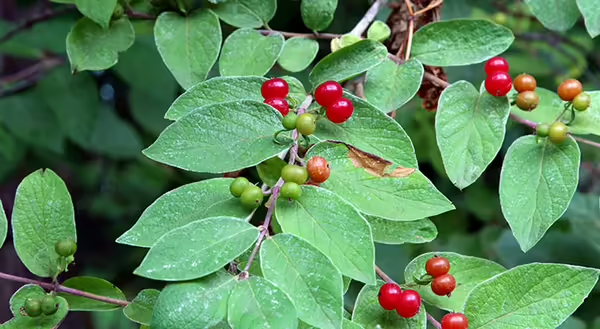
Bush Honeysuckle is an invasive species. It grows densely, shading out native plant species and releases a chemical that halts surrounding plant growth. Additionally, it stops tree regeneration, preventing forest succession7. Bush Honeysuckle was originally introduced in southern Ohio in the 1950s. However, it is native to northeastern Asia. The species has spread throughout the eastern United States8.
Identification
Bush Honeysuckle is a tree-like shrub that has white flowers and long oval leaves. Its leaves are dark green and are arranged opposite one another. Its flowers emerge in pairs, starting out white before fading to gold9. It can grow to be 20 feet tall and has a spread of up to 15 feet. It has small red berries that sit in groups of 2 to 4. Honeysuckle bark is striped, but larger, more mature bushes have large grooves10.

Treatment
Bush Honeysuckle can be hand pulled or cut to the base and treated with herbicide. Cutting and treating the stump is best done in mid-summer. The stump should immediately be sprayed with 20% glyphosate solution11. The root systems are shallow, so they can be hand pulled with ease if caught early enough12.
Cutleaf Teasel
(Dipsacus laciniatus)
What is Cutleaf Teasel?
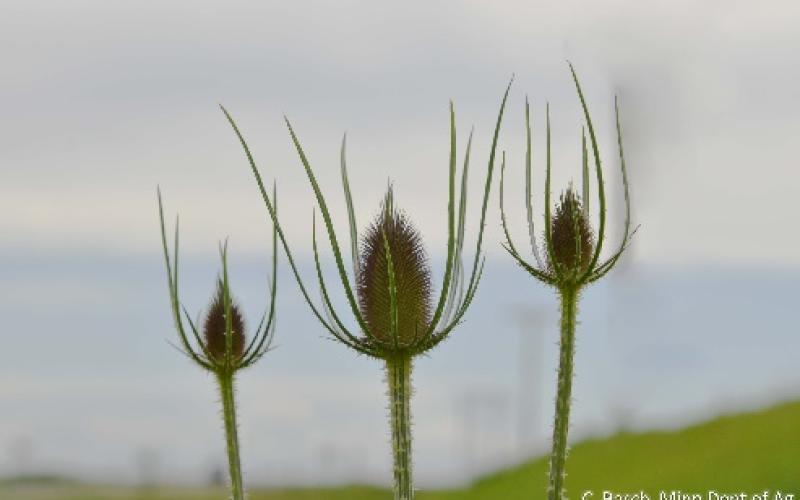
Cutleaf Teasel is an invasive species. It spreads quickly, choking out native plant life. Due to its abundant seeds, it is able to spread easily. It originated in Europe but was brought to North America in the 18th and 19th century13. The plant was likely cultivated for wool processing or for ornamental use14.
Identification
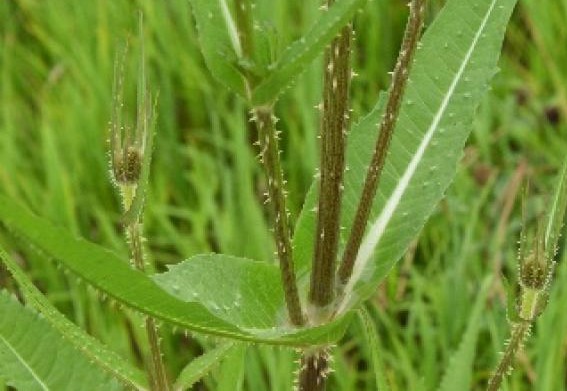
Cutleaf Teasel has a spikey seed head. Its leaves make a ‘cup’ that holds water. It can grow up to 8 feet tall and has lavender or white flowers. Its many small flowers pack into its cone-shaped head15. The seed head has thin leaves that grow from the base of it. The stem of Cutleaf Teasel is hollow and covered in spines16. The plant remains throughout the winter, becoming woody after it flowers17.
Spray until it goes away!
It is best to spray Cutleaf Teasel with a foliar spray of 2% tricolpyr in the spring. In early summer, the seed heads should be cut off the plant. In severe cases, mowing may be necessary. However, you should not mow after the flowers have seeded18.
Japanese Knotweed
(Fallopia japonica, syn. Polygonum cuspidatum)
What is Japanese Knotweed?
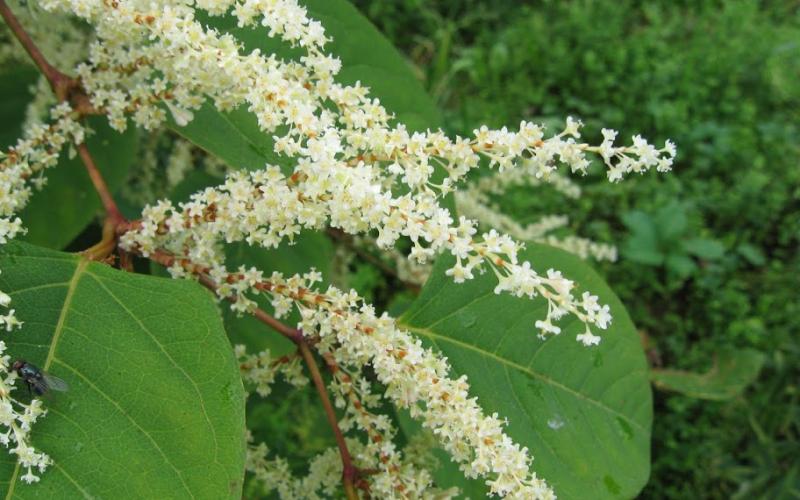
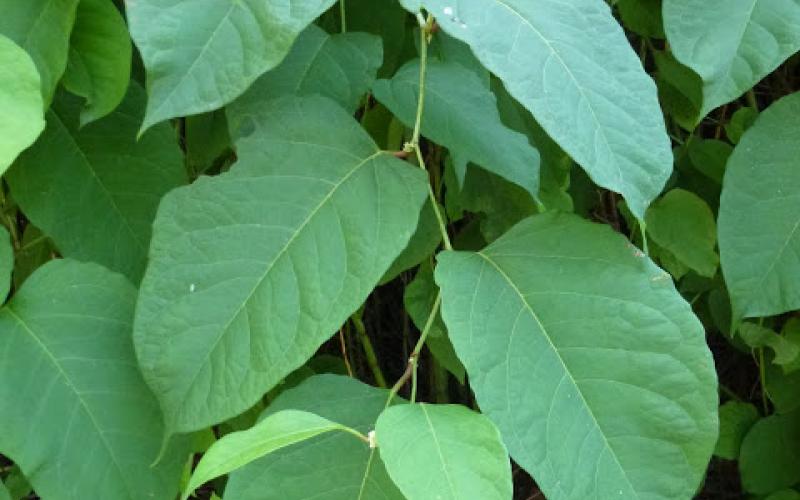
Japanese Knotweed is an invasive species. It is an aggressive-growing plant that spreads quickly, crowding out native plant species. It is spread through a combination of seeds and underground rhizomes that can spread as far as 65 feet19! Seeds are transported by animals and on the bottom of people’s shoes20. Japanese Knotweed was introduced to North America in the late 1800s from Japan and China. It was originally planted as an ornamental bush because of its flowers and height21.
How can I identify Japanese Knotweed?
Japanese Knotweed is a densely growing shrub that prefers area in full sun and along roads and trails, although it can grow in almost any habitat22. Japanese Knotweed grows up to 9 feet tall. It is identified by its hollow, woody stem and greenish-white flowers that grow in clumps. Stems have mottled red-purple stems and appear reddish-brown in winter. The leaves are a rounded oblong shape and feel like very fine sandpaper23.
Should I mow it? NO!
Mowing Japanese Knotweed increases the chance it has to re-sprout. It is a difficult plant to remove. Treatment for Japanese Knotweed requires cutting the stem before using an herbicide treatment after it flowers to prevent further spreading24.
Mugwort
(Artemisia vulgaris)

What is Mugwort?
Mugwort is an invasive species. It spreads through its seeds and underground stems, choking out native plant life. It is a member of the aster family that was introduced to the United States from Eurasia in the 16th century25.
Identification
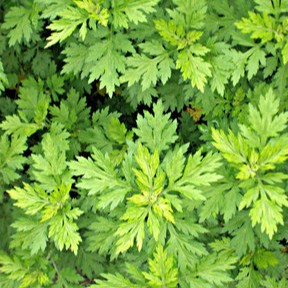
Mugwort has a brown, hairy stem. Its leaves have large lobes that alternate down the stem. White hair covers the undersides of the leaves, making them look gray. The plant also has a pungent, herbal aroma that can be smelled when its leaves are crushed26.
Treatment
In the spring and early summer, Mugwort can be hand pulled. It can also be mowed before the seed heads have matured. However, in order to fully eliminate Mugwort, it may need to be treated with triclopyr27.
Phragmites/Common Reed
(Phragmites australis)
What are Phragmites?
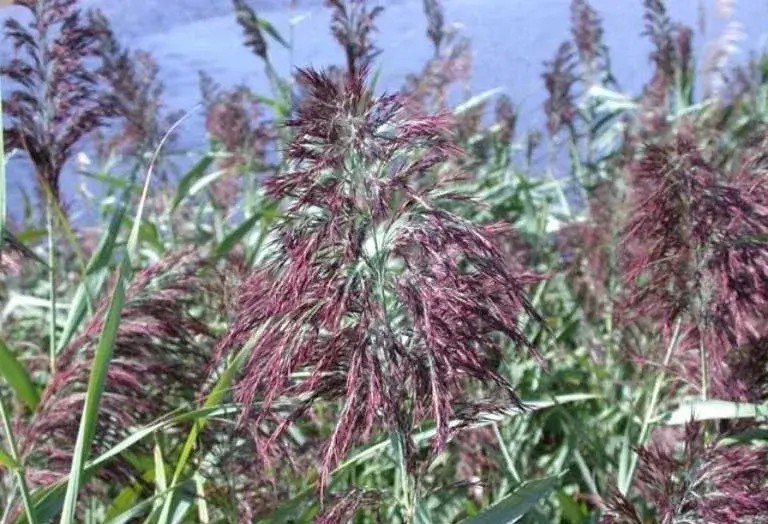
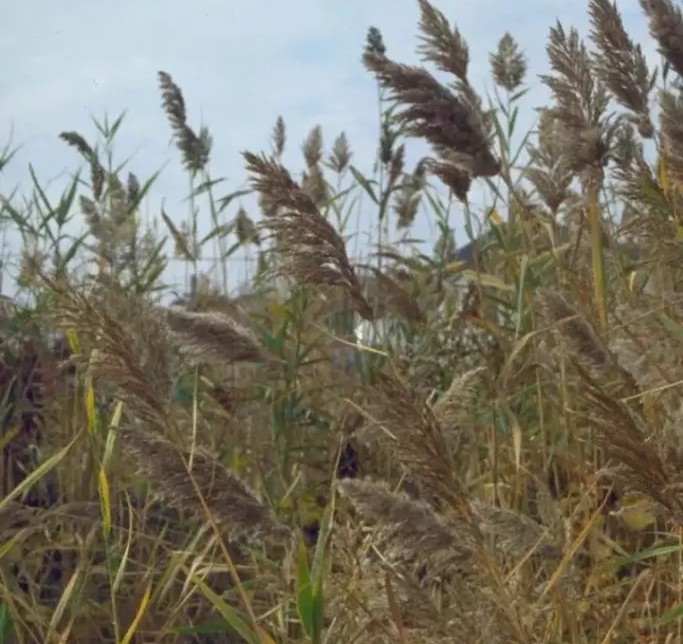
Phragmites are an invasive reed grass that thrives in wetland areas. There are both Native and non-native strains of this grass in the U.S., but the nonnative, invasive species is the most common. This grass can grow up to 15 feet tall! It spreads quickly through underground roots and stems called rhizomes and stolon, crowding out native grasses and plants. Rhizomes are horizontal underground roots and stolen are stems that grow horizontally along the ground28.
Non-native, invasive strains of Phragmites originated in the Middle East and are native to Europe and Asia. This species was accidentally introduced to the U.S. from contaminated packing materials on cargo ships. It was discovered in the U.S. between the 1700s and early 1800s29.
Identification
While non-native invasive strains of Phragmites can look similar to their native counterparts, there are some major differences between the two. During the summer, non-native, invasive strains of Phragmites have purplish feather-like tops. The stalks of the reeds are hollow and tan or green in color, unlike their native counterparts which are reddish-purple in color30.
Treatment: Herbicide spray vs. Drowning
It is best to treat Phragmites using an herbicide spray. Cutting underwater is another common technique. This technique starves the grass of the necessary oxygen it needs to survive by cutting the stem below the waterline in a marshy area, essentially drowning the plant. Native plants should be planted in place of Phragmites to prevent erosion31.
Poison Hemlock
(Conium maculatum)
What is Poison Hemlock?
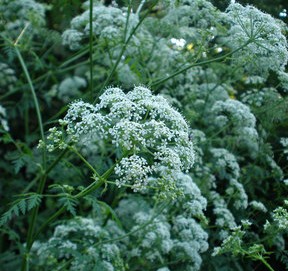
Poison Hemlock is an invasive species. It is an aggressive plant that spreads quickly, crowding out native plant species. Its seeds are often spread by mowing, agriculture equipment, and road maintenance. Poison Hemlock originated in Europe but has spread to all parts of the United States32.
Identification
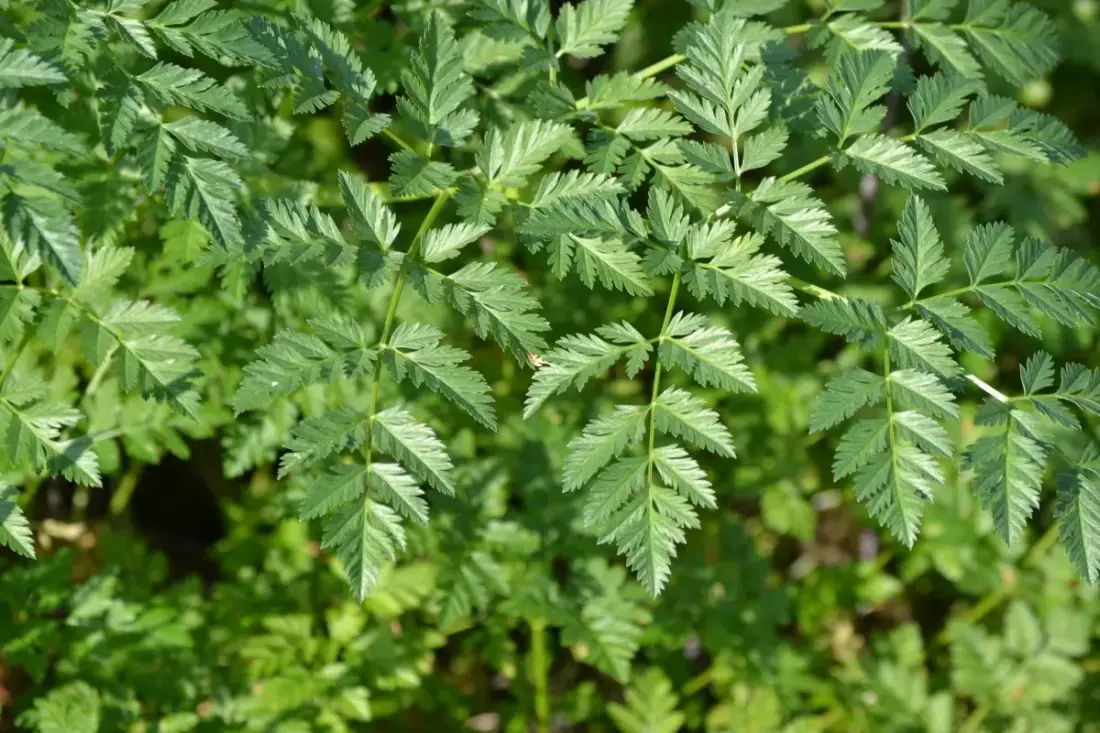
Poison hemlock has small clusters of white umbrella-like flowers. It can be identified by its small feather-like leaves. Its long hollow stem is mottled with dark purple spots. Poison Hemlock look-a-likes do not have this33!
Be careful when handling!
Poison hemlock is toxic and can be lethal if ingested. It can also be absorbed through the skin and be breathed in, so wear gloves and a mask when handling it34.
Poison hemlock should be treated in the spring with foliar spray for two years. It is poisonous, so wear a mask and gloves35.
Symptoms of Hemlock poisoning
- Sweating.
- Vomiting.
- Dilated pupils (mydriasis).
- Excess salivation.
- Dry mouth (xerostomia).
- Rapid heartbeat (tachycardia).
- High blood pressure (hypertension).
- Restlessness or confusion.
- Muscle weakness and muscle twitches (myoclonus).
- Tremors and seizures36.
If you believe you may have ingested poison hemlock, seek immediate medical attention.
Reed Canary Grass
(Phalaris arundinacea)
What is Reed Canary Grass?
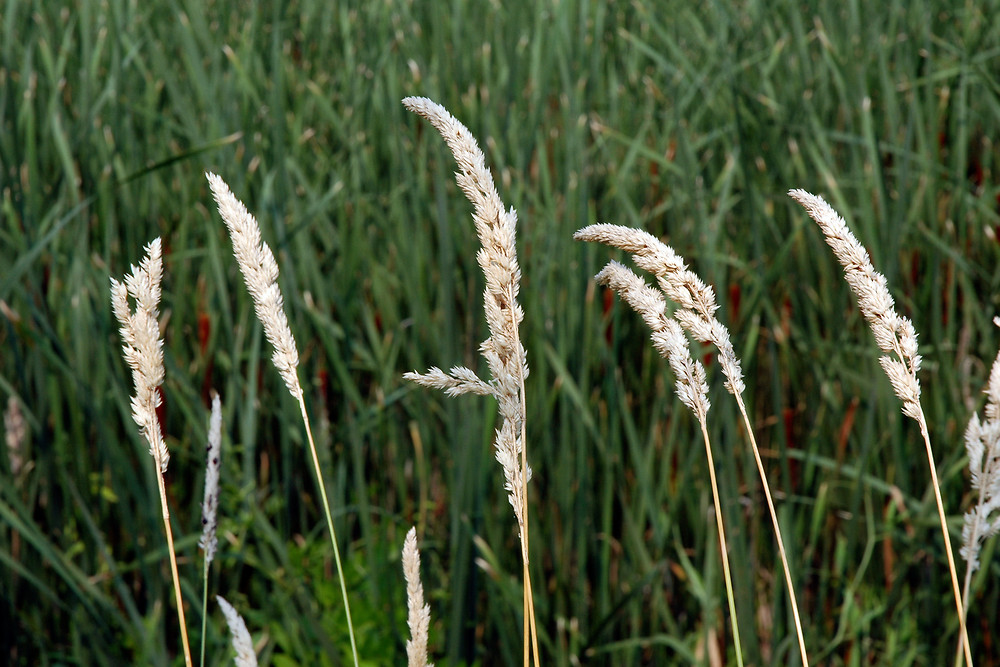
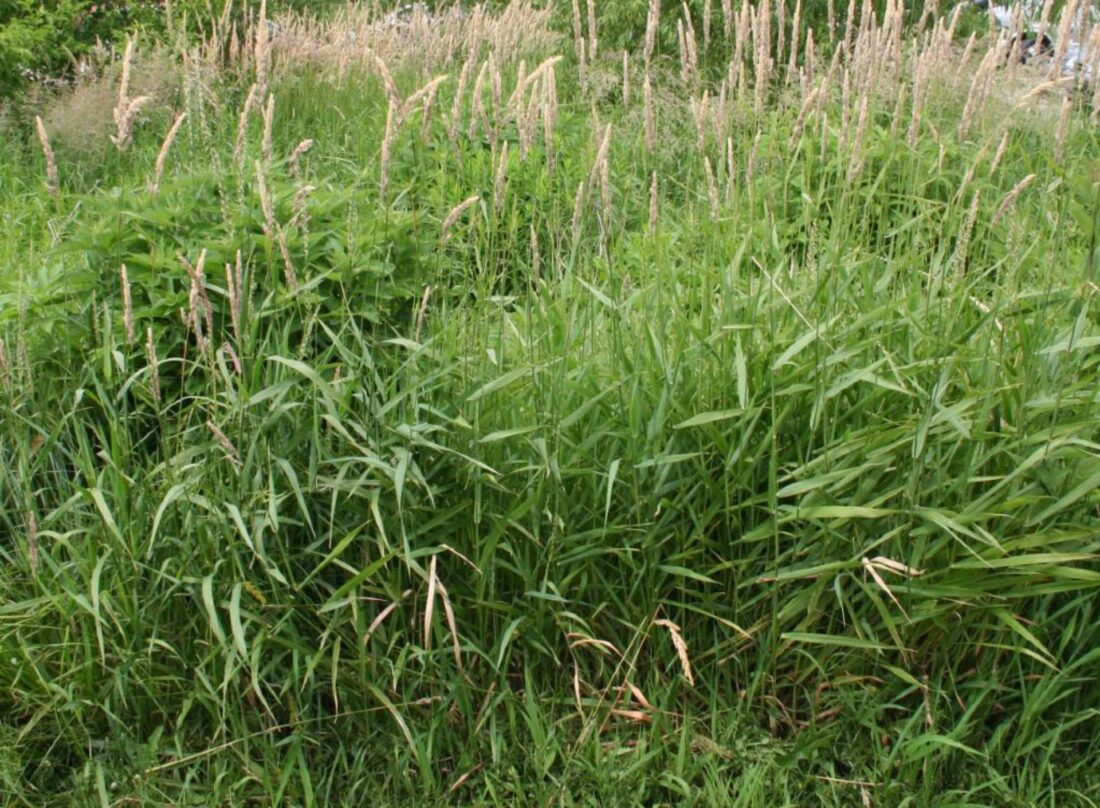
Reed Canary Grass is an invasive species. It grows densely, inhibiting the growth of native plant species. It spreads aggressively, making removal difficult37.
This plant is native to regions of Europe, Asia, and North America. In the United States, Reed Canary Grass has been planted since the 19th century for erosion control and forage. It was selected for its vigorous growth but has spread prolifically to many parts of the United States38.
Identification
Reed Canary Grass grows to be 2 to 6 feet tall. Its leaves grow at a 45-degree angle and are reddish at the top. Native species of reed grass are much shorter than Reed Canary Grass. This grass also has a larger central vein than other native grasses39.
Mow it, don’t grow it!
Reed Canary Grass should be mowed during the summer. In the fall, the plant should be treated with 2% glysophate solution. This process should be repeated for several years40. For areas with larger amounts of Reed Canary Grass, prescribed burns may be necessary. This should be done during late spring or fall and will help native vegetation growth. The prescribed burns will need to be repeated for 5 to 6 years41.
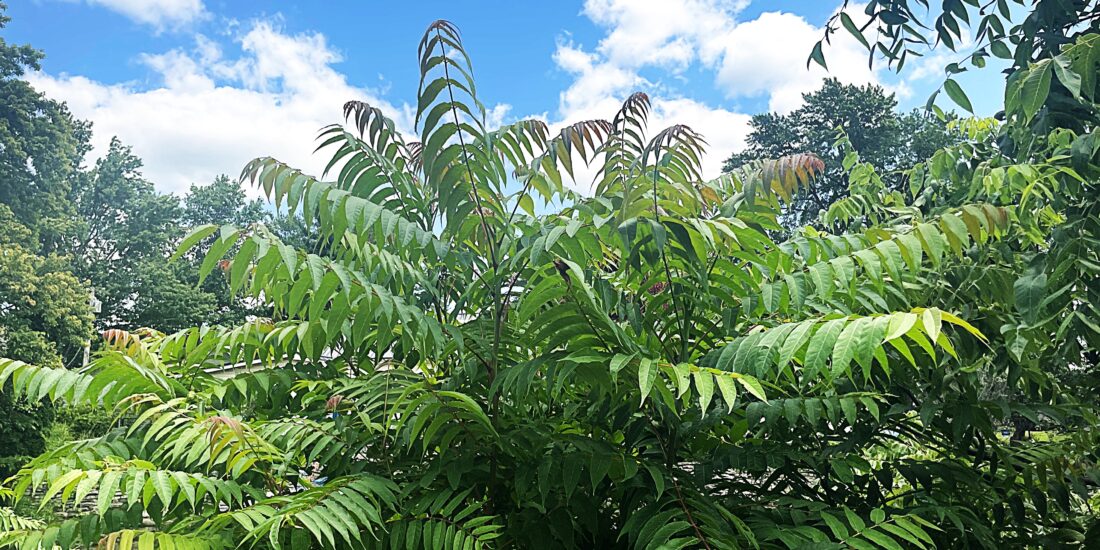
Tree of Heaven
(Ailanthus altissima)

What is Tree of Heaven?
Tree of Heaven is an invasive species. It spreads quickly and contains a toxin that kills surrounding plants. It is often confused with a Black Walnut tree. The tree originated in China but was brought to the United States in the late 18th century42.
Identification
Tree of Heaven’s compound leaves have notches at their base. Its bark starts smooth but grows fissured with age. The tree has distinctive heart-shaped leaf scars. Black Walnut trees are similar, but their bark has deep furrows. The leaflets of a Black are also finely toothed, unlike Tree of Heaven43.
Treatment
Smaller Tree of Heaven saplings can be treated with foliar spray. For trees that are less than 6 inches in diameter, they can be treated with triclopyr. This should be done during late summer to early fall44.
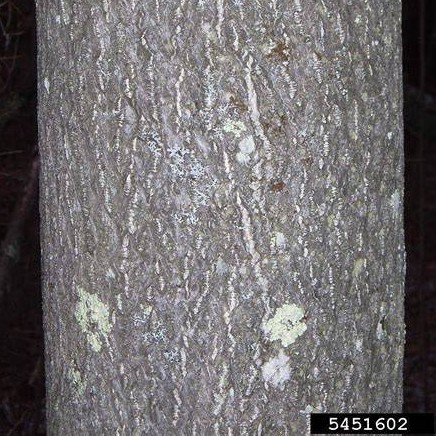
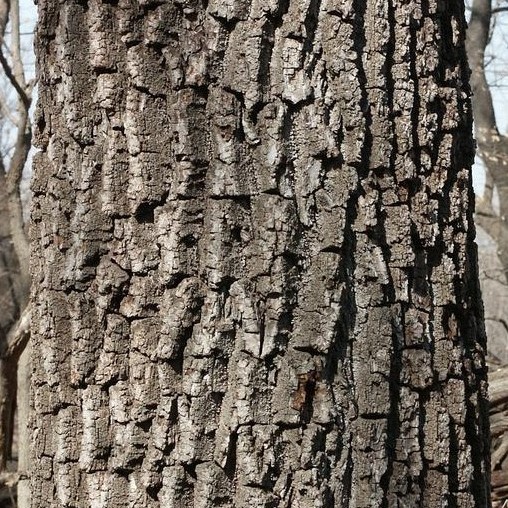
Tree of heaven bark is smooth compared to Walnut bark which has furrows.
Poison Ivy – NOT INVASIVE!
(Toxicodendron radicans)
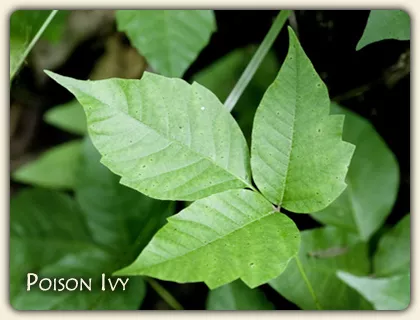
Leaves of three let it be!
Poison Ivy is a native weed that spreads along the ground and can climb up trees for 10 feet or more45. Poison Ivy is identified by its compound leaves, where each leaf is divided into three leaflets. The center leaf has a longer stem compared to the smaller leaflets on either side. Poison Ivy can sometimes be identified by its reddish stem in the spring, and thick, hairy vines in the winter (usually found on trees)46.
Poison Ivy contains an oil which may cause an irritating skin reaction. It is important to wash any exposed skin and clothing with soap and water within the first five minutes of contact to prevent a reaction47.
Can I Burn it? No!
Poison Ivy can be controlled by using an herbicide but should not be burned. The oil from the leaves of the plant can vaporize in extreme heat and create a severe rash to any exposed skin48!
To treat large vines on trees, the vine needs to be cut six inches above ground level before using an herbicide spray to kill the root system49.
Before treating Poison Ivy, it is important to properly identify the plant before proceeding. Virginia Creeper, Japanese Honeysuckle, Box Elder, and Fragrant Sumac are commonly mistaken for Poison Ivy50. Sections of Poison Ivy found in remote areas should be left alone as it is a reliable food source for a variety of birds and small mammals51!
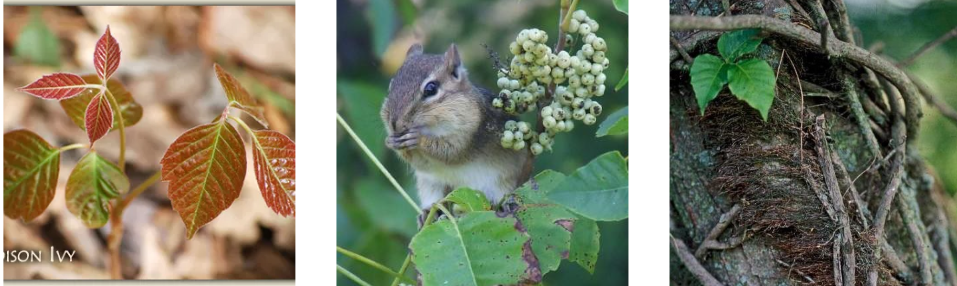
(Left) Young leaves from a Poison Ivy plant often have a reddish sheen to them.
(Middle) A squirrel eats the berries off of a Poison Ivy plant.
(Right) Poison Ivy often climbs up trees and can have a ‘hairy’ appearance in the winter.
Footnotes
[1] National Park Service. “What are Invasive Species?”
[2] Science Insights. “What Is an Introduced Species? Definition and Effects.”
[3] National Park Service. “What are Invasive Species?”
[4] Science Insights. “What Is an Introduced Species? Definition and Effects.”
[5] Purdue University. Indiana Accredited Horticulturalist Program. “Ch 02 – Plant Names and Plant Recognition”
[6] Piedmont Master Gardeners. “Native Species or Cultivars of Native Species—Does It Matter?”.
[7] Anna Osborne. “Invasive Species Manual.”
[8] Ohio DNR. “Amur Honeysuckle.”
[9] Anna Osborne. “Invasive Species Manual.”
[10] Ohio DNR. “Amur Honeysuckle.”
[11] Ohio DNR.
[12] Anna Osborne.
[13] Anna Osborne. “Invasive Species Manual.”
[14] National Park Service. “Exotic Species: Cutleaf Teasel.”
[15] Anna Osborne. “Invasive Species Manual.”
[16] National Park Service. “Exotic Species: Cutleaf Teasel.”
[17] Anna Osborne. “Invasive Species Manual.”
[18] National Park Service. “Exotic Species: Cutleaf Teasel.”
[19] University of Connecticut, “Invasive Plant Fact Sheet: Japanese Knotweed
[20] University of Maryland Extension, “Invasives in your woodland: Japanese knotweed”
[21] Anna Osborne, “Invasive Species Manual”
[22] Anna Osborne
[23] UCONN
[24] Anna Osborne
[25] Anna Osborne. “Invasive Species Manual.
[26] Anna Osborne.
[27] Anna Osborne.
[28] Anna Osborne, “Invasive Species Manual”
[29] Department of Natural Resources, “Non-Native Subspecies of Phragmites (Common Reed, Phragmites australis subsp. Australis)”
[30] Minnesota Department of Natural Resources
[31] Anna Osborne
[32] Anna Osborne. “Invasive Species Manual.”
[33] Anna Osborne.
[34] Anna Osborne.
[35] John E. Woodmansee. “Use Precautions When Controlling Poison Hemlock.”
[36] Cleveland Clinic. “Poison Hemlock.”
[37] Missouri Department of Conservation, “Poison Ivy Control”
[38] University of Maryland Extension, “How to Identify Poison Ivy”
[39] MDC
[40] MDC
[41] MDC
[42] MDC, UME
[43] MDC
[44] Anna Osborne. “Invasive Species Manual.”
[45] Missouri Department of Conservation. “Reed Canary Grass.”
[46] Anna Osborne. “Invasive Species Manual.”
[47] Missouri Department of Conservation. “Reed Canary Grass.”
[48] Anna Osborne.
[49] Anna Osborne. “Invasive Species Manual.”
[50] Anna Osborne.
[51] Anna Osborne.