EDITOR’S NOTE: Welcome to Resilient Goshen, a recurring column exploring the people, places and natural systems that shape our community. Written by Aaron Sawatsky-Kingsley, the City of Goshen’s director of Environmental Resilience, the series offers insight into the forests, waterways, wildlife and landscapes that make Goshen unique and the shared stewardship that helps them thrive.
By AARON SAWATSKY-KINGSLEY
Telling stories is the way we define who we are. Day by day, probably hour by hour, we all tell stories about ourselves through our own internal dialogue. Day by day and hour by hour, our news and social media outlets also tell the story of who we are, both individually and collectively. We use our actions, along with the people and things that surround us, to help tell that story. We do this so others will know what moves us, what drives us, what hurts us and what heals us.
Like each of us, our stories are complicated and reflect a mixture of values, sometimes confusing and contradictory. The point of storytelling is to make sense of ambiguities and divergence, to find lines threaded through obscure moments and difficult times that weave larger truths together. It’s not always easy. Our real-life stories are always in flux, so tying up episodes in neat little arcs can be tricky. But we sure do like it. It’s satisfying to find patterns, to be surprised by a twist, to reach a resolution and to look back and understand how everything fits together. Movies, books and TV shows hit that spot.
Trees in Goshen Connect Our Past, Present and Future
In the Maple City, I think trees are one of those through lines in our larger story. Admittedly, they are mostly in the background, an afterthought, maybe even forgotten. In Goshen, trees are so ubiquitous, always around us, on the horizon and right in front of us, that we usually don’t pay attention to them. Even in my job as the city forester, I take most of the trees I encounter each day for granted, paying attention only to the few that need it. Nevertheless, thousands of trees are quietly living and growing with us in our city. They are braided into our lives and our stories.
We are forest people. That may be a surprising thing to hear or suggest. But when I think about what happens in this soil, in this part of the earth when left to its own devices, a background truth, a consistent through line, is revealed: Trees grow. Forest emerges. We see and experience it when mowing, gardening, farming or other kinds of intensive management cease. We live in constant engagement with and connection to the forest around us, and below our feet, even if that connection is primarily an effort to keep it at bay. Some of us work extremely hard at keeping it at bay. Most of us, nearly all of us, allow some of the forest to enter our properties. Most of us tolerate or even desire a tree or two, or more, around our homes. We benefit from them in many valuable ways, ways that nothing else can reproduce, even while they demand time and energy from us. We are forest people. We live where trees live.
While trees may not dominate the themes of our personal stories or the kinds of stories we seek out, most of us have stories about trees that are important to us. The stories matter, and the trees in those stories matter. In a community like ours, where trees have been a constant backdrop for generations, including long before the settlement of Goshen, hearing these stories can tell us things about ourselves, about each other and about who we are. Trees and forests are so evocative. Look at our fairy tales, Bible stories and even certain advertisements. Because of this, they become significant characters in our lives. They shape the kind of community we are.
With this in mind, we invite you to come listen to and tell stories about trees. On Tuesday, June 30, from 6 to 7 p.m., we will gather under the large oak trees at the Rieth Interpretive Center to share our stories. Tree stories in various languages and forms are welcome, including music and poetry. Bring a lawn chair or blanket.
If you’d like more information about this event, contact us at [email protected].
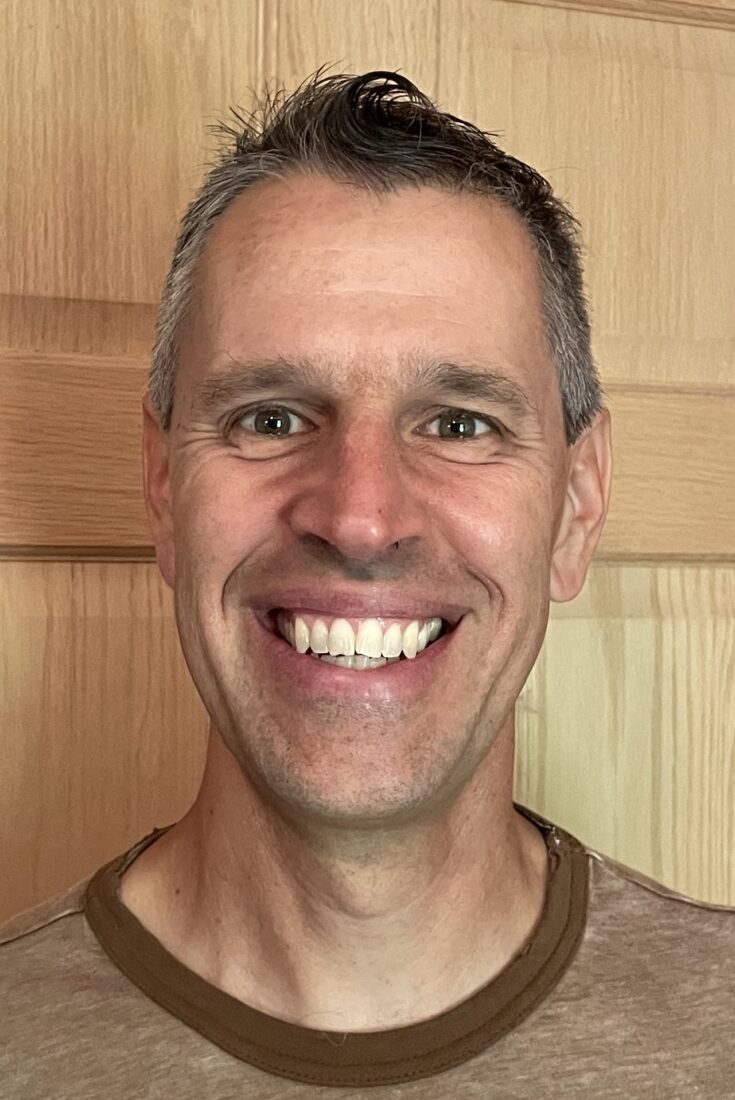
Aaron Sawatsky-Kingsley serves as Goshen’s director of Environmental Resilience and joined the City as its first urban forester in 2006. Readers can find this column bi-weekly on Saturdays in The Goshen News.